

The Story of Fort Roberdeau In the spring of 1778, the struggle for independence appeared to be over. The British occupied the rebel's capital city, Philadelphia. George Washington's army was destitute at Valley Forge.
American & Regional History
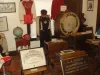
Fort Mason Museum allows visitors to experience life in early twentieth-century Fayette County. It features exhibits of local industries, a turn-of-the-century physician's office, typical home life, and a hands-on early school room.

The Johnstown Flood Museum is about one of the most shocking episodes of American history. On May 31, 1889, a neglected dam and a phenomenal storm led to a catastrophe in which 2,209 people died. The Johnstown Area Heritage Association receives many inquiries about the 1889 flood.

Visions of the past come alive at the Rebecca Hadden Stone House Museum. Locally donated and shared artifacts from the mid-19th century to the early 20th century adorn the rooms, and a beautifully maintained herb and perennial garden graces the grounds.

The present building, "Coates House," was made possible in part by a state grant administered through the Pennsylvania Historical and Museum Commission, as well as other grants and funds raised by the Society.

The Robinson Museum (located directly behind Center House) was made possible through a bequest by Florence Himes-Robinson and is the official Museum of Elk County.

The A-K Valley Heritage Museum is located on the corner of Lock Street and East Seventh Avenue in Tarentum.

During the 1892 labor strike, which pitted Carnegie Steel Company against the Amalgamated Association of Iron and Steel Workers, the Bost Building served as the union's local headquarters and as the base for American and British newspaper correspondents reporting on the event.

Fort Roberdeau Historic Site and Natural Area includes an 1858 barn containing exhibits and a museum shop, an education center in an 1860 farmhouse, three nature trails, picnic facilities, and White Oak Hall, a large multipurpose facility.
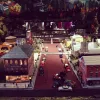
The Jefferson County History Center relocated to the newly preserved N. G. Edelblute Building (1855-1875) on Historic Brookville's Main Street in March 2004, marking the Bicentennial Year of the county's founding.
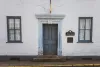

Taylor Memorial Museum houses a vast display of glass from local industry, plus many interesting artifacts from the lumbering, mining, and farming communities in the surrounding area.
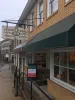
The historic Flatiron Building, constructed around 1830 along the National Road, was initially built for commercial use. Its distinctive wedge-shaped design—resembling a traditional clothing iron—has made it a prominent landmark in the Brownsville.

The building stands near the center of Sharpsville's commercial district, on the east side of a block once dominated by the magnificent 30-room Pierce Mansion. That brick Second Empire-style mansion, completed in 1875, was razed in 1952, and public housing was built in its place.

The Wilder Museum boasts a collection of historical artifacts that will fascinate any visitor.

1910 was a prosperous year for Franklin and included the building of the National Guard Armory overlooking French Creek.

Erie Maritime Museum, Homeport U.S. Brig Niagara, 150 East Front Street. As the homeport of Pennsylvania's official flagship, the museum offers the story of the Niagara from the reconstruction of the warship that won the Battle of Lake Erie in the War of 1812.

The mission of the West Overton Museums is to illustrate the history of West Overton Village, its distillery, coal and coke heritage, and the birthplace of Henry Clay Frick.

After three years of painstaking restoration, the U.S. Brig Niagara was finished in summer, 1990.
Coal & Coke Heritage Center is focused on the coal and coke industries Connellsville Coke Region in the roughly hundred year span of 1870-1970 the captains of the sector whose vision, determination, tactics and resources were responsible for the emergence of industrial behemoths and the amass

The Firefighters Historical Museum, Inc. is located at the corner of West 5th and Chestnut Streets in downtown Erie. The museum was founded in 1969, Incorporated in 1971 and opened to the public on May 3, l976.

Built in 1802, Greersburg Academy is the oldest public building in Beaver County and the oldest advanced education institution North of the Ohio River.

The mission of the Venango Museum of Arts, Science, and Industry is to preserve and conserve its holdings, as well as the beautiful Beaux Arts building it occupies, which is listed in the National Register of Historic Places.

The birthplace of the Seamless Tube Industry, named after the inventor of barbed wire, Isaac Ellwood, and developed by the Beaver Falls wire manufacturer, Henry Hartman.